


History of Firearms: From Early Guns to Modern Weapons

Introduction
The history of firearms is a fascinating journey that spans centuries, from rudimentary gunpowder weapons to advanced modern rifles and handguns. Understanding this evolution helps gun enthusiasts, historians, and collectors appreciate the technology, craftsmanship, and innovation behind today’s firearms. This article traces the major milestones in the development of guns, highlighting key inventions, historical uses, and the technological advancements that shaped modern firearms.
The Origins of Firearms
The earliest firearms appeared in China during the 10th century, following the invention of gunpowder. These primitive weapons, often called “fire lances,” were basic tubes that fired projectiles using explosive powder.
- Early firearms were slow, inaccurate, and dangerous.
- They revolutionized warfare by giving infantry the ability to pierce armor previously impervious to traditional weapons.
- By the 13th and 14th centuries, firearms spread to the Middle East and Europe, becoming central to military strategy.
Internal link suggestion: Link to antique and collectible firearms for historical models.
Outbound link suggestion: Link to Smithsonian Museum History of Firearms for authoritative historical references.
Firearms in Medieval and Renaissance Europe
By the 15th century, European guns evolved into more reliable hand cannons and matchlock firearms. Key developments included:
- Matchlock mechanism: Allowed a slow-burning match to ignite the powder, making firing easier and safer.
- Arquebus: A portable firearm with improved accuracy, widely used in armies.
- Renaissance innovations: Early rifling techniques emerged, improving projectile stability.
These innovations marked the transition from crude, single-shot weapons to more practical firearms capable of changing the battlefield.
Internal link suggestion: Link to historical firearm guides for detailed historical articles.
The 17th and 18th Century: Flintlocks and Muskets
The 17th and 18th centuries saw the introduction of flintlock firearms and smoothbore muskets:
- Flintlock rifles used sparks from flint striking steel to ignite powder.
- Muskets became standard infantry weapons due to their simplicity and reliability.
- Improvements in barrel design, stock ergonomics, and sighting systems enhanced effectiveness.
This era established many principles still relevant in modern rifle maintenance and firearm handling.
Outbound link suggestion: Link to History Channel: Guns Through Time for historical firearm context.
19th Century: Percussion Caps and Early Rifles
The 19th century marked significant advancements in the history of firearms:
- Percussion caps replaced flintlocks, offering faster ignition and greater reliability.
- Rifled barrels became widespread, improving accuracy at longer ranges.
- Revolvers and repeating rifles emerged, increasing rate of fire.
These innovations laid the foundation for modern hunting and sporting rifles.
Internal link suggestion: Link to rifles category for modern descendants of historical designs.
20th Century: Semi-Automatic and Automatic Firearms
The 20th century brought revolutionary changes in the evolution of guns:
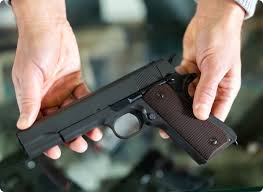
- Semi-automatic pistols allowed rapid follow-up shots, improving self-defense and military effectiveness.
- Automatic rifles were introduced in World War I and II, transforming infantry tactics.
- Innovations in metallurgy, ammunition, and optics led to lighter, more durable, and more accurate firearms.
Internal link suggestion: Link to modern firearms product page for semi-automatic and automatic weapons.
Outbound link suggestion: Link to Military History Encyclopedia for firearm development in wars.
Collectible and Antique Firearms
Understanding the history of firearms is also essential for collectors:
- Antique firearms often retain historical value and craftsmanship not found in modern guns.
- Popular collectible types include flintlocks, muskets, early revolvers, and matchlocks.
- Collectors must adhere to legal regulations regarding ownership and restoration.
Internal link suggestion: Link to premium firearms collection for collectible pieces.
Firearm Innovations and Technology Today
Modern firearms are the result of centuries of innovation:
- Advanced materials reduce weight and improve durability.
- Precision rifling, polymer stocks, and modular systems allow customization.
- Optics, scopes, and electronic sights enhance accuracy for sport, hunting, and defense.
- Safety mechanisms and ergonomics ensure responsible usage.
This continuous evolution highlights the importance of understanding firearm history for both enthusiasts and responsible owners.
Conclusion
The history of firearms illustrates an incredible journey from primitive gunpowder tubes to sophisticated modern weapons. By studying historical advancements, collectors, shooters, and enthusiasts gain insight into firearm design, technology, and responsible ownership. Appreciating the past also informs the present, helping owners select, maintain, and use firearms safely and effectively.
Internal links:
- Modern Firearms: https://premium-firearms.com/product-category/guns/
- Collectible Firearms: https://premium-firearms.com/product-category/guns/
Outbound links:
- Smithsonian Museum: https://www.si.edu/
- History Channel Guns Through Time: https://www.history.com/
- Military History Encyclopedia: https://www.military.com/


