


Benefits of Smokeless Powder vs Black Powder: Why Modern Firearms Use Smokeless Propellants

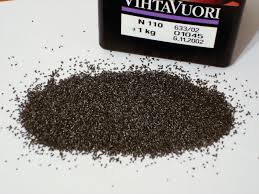
One of the most commonly asked questions on Quora and firearm-education forums is: what are the benefits of smokeless powder compared to black powder?
This question continues to trend because it sits at the intersection of history, technology, safety, and modern ammunition performance.
Smokeless powder did not simply replace black powder—it redefined how firearms, cartridges, and modern ammunition systems function. From cleaner operation to higher efficiency, smokeless powder represents one of the most important technological breakthroughs in firearms history.
What is smokeless powder exactly?
Smokeless powder is a modern firearm propellant designed to burn more efficiently and cleanly than traditional black powder. Despite its name, it is not truly “smokeless,” but it produces far less visible residue and smoke when ignited.
Unlike black powder, which has been used for centuries, smokeless powder was developed in the late 19th century to meet the demands of modern firearms, higher velocities, and cleaner operation.
Key characteristics of smokeless powder include:
- Cleaner combustion
- Higher energy density
- More consistent performance
- Reduced residue and fouling
This fundamental shift enabled the development of modern cartridges, semi-automatic firearms, and compact ammunition designs.
What is the main difference between black powder and modern smokeless powder?
The primary difference lies in how they burn and how much energy they release.
Black powder:
- Burns very rapidly
- Produces heavy smoke and residue
- Has lower energy efficiency
- Requires frequent cleaning
Smokeless powder:
- Burns progressively
- Produces minimal smoke
- Delivers more energy per unit
- Keeps firearms cleaner
This difference is why modern firearms are engineered specifically for smokeless powder, while historical firearms were built around black powder’s limitations.
Why was smokeless powder invented?
Smokeless powder was developed to solve several problems caused by black powder:
- Thick smoke obscuring vision
- Excessive fouling in barrels
- Limited ballistic efficiency
- Slower follow-up capability
Military forces in the late 1800s needed cleaner, faster, and more reliable ammunition, leading to the invention of smokeless powder and the rapid modernization of firearms worldwide.
When did smokeless powder replace black powder?
Smokeless powder began replacing black powder in the 1880s–1890s, starting with military adoption and later expanding to civilian use.
By the early 20th century, smokeless powder had become the standard propellant for most modern cartridges, while black powder became primarily associated with:
- Historical firearms
- Muzzleloaders
- Recreational and reenactment use
How did smokeless powder change firearm design?
Smokeless powder enabled:
- Smaller cartridges with higher performance
- Faster bullet velocities
- Semi-automatic and automatic firearm systems
- Longer effective ranges
Without smokeless powder, modern cartridges such as the 9mm, .38 Special, and countless rifle rounds would not exist in their current form.
Why do modern firearms use smokeless powder instead of black powder?
Modern firearms rely on smokeless powder because it:
- Supports higher performance with less residue
- Allows tighter mechanical tolerances
- Enables reliable cycling in repeating firearms
- Reduces maintenance demands
Black powder simply cannot meet the operational requirements of modern firearm platforms.
Is smokeless powder better than black powder?
“Better” depends on context, but for modern firearms, smokeless powder is objectively superior in terms of:
- Efficiency
- Cleanliness
- Consistency
- Compatibility with modern designs
Black powder still has value in traditional and historical shooting disciplines, but it is not suited to modern ammunition systems.
Does smokeless powder produce more recoil than black powder?
Not necessarily. Recoil is influenced by multiple factors, including:
- Firearm weight
- Cartridge design
- Projectile mass
- Energy transfer
Smokeless powder is more efficient, meaning less material can produce comparable or better results, often without excessive recoil.
Why is smokeless powder called “smokeless” if it still produces smoke?
The term “smokeless” is relative. Compared to black powder—which creates dense clouds—smokeless powder produces minimal visible smoke, greatly improving visibility and operational effectiveness.
Can black powder be used in modern cartridges?
Modern cartridges are designed around smokeless powder. Black powder behaves very differently and is generally unsuitable for modern cartridge designs due to fouling and performance limitations.
Why do ammunition manufacturers prefer smokeless powder?
Manufacturers rely on smokeless powder because it:
- Provides consistent ballistic performance
- Scales well for mass production
- Meets modern safety and reliability standards
- Supports a wide range of cartridge designs
These characteristics make smokeless powder essential for today’s ammunition industry.
What should shooters understand before choosing ammunition types?
Shooters should understand that:
- Firearms are designed for specific propellant classes
- Modern firearms are engineered around smokeless powder
- Using correct, manufacturer-approved ammunition is essential for safety
This reinforces why smokeless powder remains the global standard.
Is smokeless powder likely to be replaced in the future?
While research into new propellants continues, smokeless powder remains dominant due to:
- Proven reliability
- Established manufacturing infrastructure
- Compatibility with existing firearms
Future developments may refine propellants, but smokeless powder is expected to remain relevant for decades.
The benefits of smokeless powder over black powder explain why it became—and remains—the foundation of modern firearms and ammunition. From cleaner operation to improved efficiency and compatibility with advanced firearm designs, smokeless powder reshaped the entire industry.
Understanding the differences between black powder and smokeless powder is essential for anyone interested in firearm history, ammunition technology, or modern shooting disciplines.


